

Recovery Process Development Stages
Engineering for Material Recovery and Regeneration
Material Recovery Engineering is grounded in Residue Diagnostics and Circular Process Mapping based on Circular Economy principles. Throughout the entire development process, the TRL (Technology Readiness Level) methodology is applied in conjunction with client-driven product validation, ensuring the technical reliability and safe application of both processes and regenerated materials.
Recovery routes are studied with the objective of preserving the maximum value already embedded in residues at their point of generation, avoiding the regression of previously processed materials to earlier stages of the production chain. This principle of Recovery Engineering seeks to minimize inefficiencies associated with reprocessing, unnecessary energy consumption, and resource losses resulting from the reintegration of materials into upstream process phases.
At HpM, regeneration process routes are initially developed at bench scale through tests and experimental trials designed to demonstrate the techno-economic feasibility of maintaining the intrinsic value of residues at their generation stage. Once the applied methodology is validated, the process is scaled up to pilot plant operation, using representative material volumes and industrial equipment at reduced scale, in order to reproduce the performance characteristics observed at bench scale.
All development stages are conducted under continuous monitoring and are subject to prior client approval through to the final homologation of processes and products derived from the pilot phase. From this point onward, industrial plant engineering is initiated. The images below illustrate the development of each of these stages.


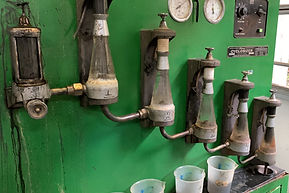


Image (A)
Bench Test
Image (B)
Lab Test - Cyclosizer
Image (C)
Pilot Plant
Image (D)
Plant Design
Image (E)
Plant Construction / Execution
Image (F)
Plant Design (Integrated Design)
Image (G)
Plant Design